
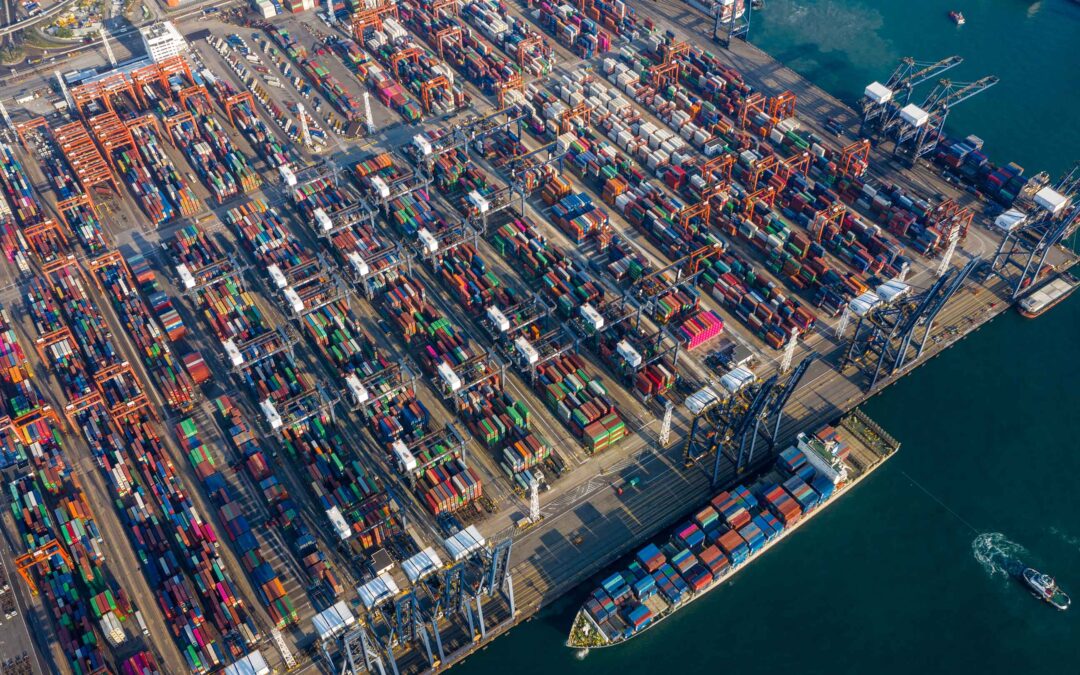
The rapid evolution of digital technology is fundamentally transforming how global manufacturers design, manage, and optimize their supply chains. In an era defined by volatility, geopolitical uncertainty, and shifting consumer behavior, traditional linear supply chain models are no longer sufficient to support competitive operations at scale. Supply chain digitization has emerged as a strategic imperative, enabling manufacturers to integrate real-time data, automation, analytics, and cloud-based collaboration across every stage of their production and distribution networks. By replacing fragmented manual systems with intelligent digital platforms, manufacturers gain unprecedented visibility into sourcing, inventory, production planning, logistics, and customer fulfillment. This digital visibility allows companies to anticipate disruptions, respond to demand fluctuations with greater speed, and reduce structural inefficiencies that once constrained operational performance. As global manufacturing networks grow more complex and interconnected, digitization is no longer a supporting tool—it is the structural backbone reshaping how industries compete, scale, and innovate in the modern economy.
One of the most immediate and impactful effects of supply chain digitization on global manufacturers is the creation of real-time end-to-end visibility. In traditional supply chains, decision-making often relied on delayed reports, siloed systems, and manual data reconciliation, which limited responsiveness and increased exposure to risk. Digitized supply chains integrate data from suppliers, production facilities, warehouses, transportation providers, and distribution channels into centralized platforms that provide continuous operational insight. Technologies such as Internet of Things sensors, cloud computing, and real-time tracking systems allow manufacturers to monitor inventory levels, equipment performance, shipment locations, and demand patterns with exceptional precision. This level of transparency enables proactive rather than reactive decision-making. Manufacturers can identify potential bottlenecks before they disrupt operations, dynamically reroute shipments in response to logistical constraints, and adjust production schedules in real time to align with fluctuating market demand. As a result, global manufacturers gain tighter control over lead times, service levels, and customer satisfaction while significantly reducing the risks associated with uncertainty and information delays.
Supply chain digitization is also fundamentally reshaping how manufacturers manage inventory and demand forecasting at a global scale. Traditional inventory strategies often relied on large safety stocks to buffer against forecasting inaccuracies and supply disruptions, tying up capital and increasing storage costs. Digital supply chain platforms leverage advanced data analytics, artificial intelligence, and machine learning algorithms to analyze historical sales data, real-time market signals, seasonal trends, and external variables such as economic indicators and regional demand shifts. This predictive intelligence allows manufacturers to forecast demand with far greater accuracy and dynamically adjust inventory levels across multiple geographic regions. Instead of overstocking or stockouts, manufacturers can maintain optimal inventory positions that balance service reliability with cost efficiency. Automated replenishment systems further enhance this capability by triggering procurement and production activities based on real-time consumption patterns rather than static forecasts. This shift from reactive inventory management to predictive, data-driven planning represents one of the most profound efficiency gains enabled by supply chain digitization in global manufacturing.
Another transformative impact of supply chain digitization is the acceleration of production planning and operational synchronization across international manufacturing networks. Global manufacturers often operate multiple production sites, contract manufacturers, and supplier ecosystems spread across different regions, each with its own capacity constraints, labor conditions, and regulatory requirements. Digitized supply chains unify these dispersed operations into coordinated digital command centers that enable real-time production planning, capacity balancing, and resource allocation. Advanced manufacturing execution systems integrated with digital supply chain platforms allow planners to simulate production scenarios, evaluate constraint impacts, and optimize scheduling across multiple facilities simultaneously. When demand spikes in one market or disruptions occur in another, production workloads can be redistributed dynamically to maintain output continuity. This level of synchronization minimizes downtime, reduces production imbalances, and ensures that manufacturing capacity is utilized to its full economic potential. As a result, global manufacturers become more agile, resilient, and capable of supporting complex multi-market strategies without sacrificing efficiency or quality consistency.
Supply chain digitization is also redefining the role of logistics and transportation in global manufacturing competitiveness. Transportation once functioned primarily as a cost center, focused on moving goods from point A to point B with limited strategic integration. Today, digital logistics platforms equipped with GPS tracking, route optimization algorithms, and freight analytics transform transportation into a core value driver. Manufacturers gain real-time visibility into shipment performance, freight capacity, fuel consumption, and delivery reliability across domestic and international lanes. Automated route optimization reduces transit times, lowers fuel costs, and improves on-time delivery rates, while predictive analytics identify potential delays caused by weather, port congestion, or regulatory disruptions. Digital documentation and blockchain-based transaction systems further streamline cross-border compliance, reducing administrative delays and minimizing documentation errors. Through these innovations, logistics becomes a digitally orchestrated extension of the manufacturing process, enhancing speed, reliability, and cost efficiency across increasingly globalized production networks.
Beyond operational efficiency, supply chain digitization is reshaping how global manufacturers manage risk, resilience, and sustainability. Recent global disruptions have exposed the vulnerabilities of rigid, opaque supply chain structures, prompting manufacturers to rethink how they design, diversify, and safeguard their supply networks. Digital risk management platforms continuously analyze supplier performance, geopolitical conditions, climate risks, and transportation reliability to identify emerging threats before they escalate into full-scale disruptions. With these insights, manufacturers can diversify their sourcing strategies, develop multi-tier supplier visibility, and implement contingency plans with greater confidence and speed. At the same time, digitization strengthens sustainability initiatives by enabling precise tracking of carbon emissions, energy consumption, waste generation, and environmental compliance across the entire supply chain. Data-driven sustainability reporting allows manufacturers to meet regulatory requirements, achieve ESG objectives, and respond to growing consumer demand for transparent and responsible production practices. In this way, digital supply chains not only enhance economic resilience but also align global manufacturing with long-term environmental and social priorities.
Ultimately, the digitization of supply chains is reshaping global manufacturers into fully connected, intelligent enterprises capable of operating with unprecedented speed, accuracy, and strategic foresight. As digital platforms continue to evolve, emerging technologies such as digital twins, autonomous logistics, and self-learning supply networks will further amplify these capabilities. Manufacturers will increasingly rely on virtual replicas of their entire supply chain to simulate disruptions, test optimization strategies, and refine production and distribution decisions before executing them in the real world. Artificial intelligence will automate complex planning decisions, continuously optimizing sourcing, production, and delivery based on live market conditions. In this digitally orchestrated environment, supply chains become adaptive ecosystems rather than fixed infrastructures. For global manufacturers, this transformation represents more than a technological upgrade—it signals a fundamental shift in how competitive advantage is created, sustained, and scaled in the digital age. Those who fully embrace supply chain digitization will define the future of manufacturing agility, resilience, and global market leadership.