
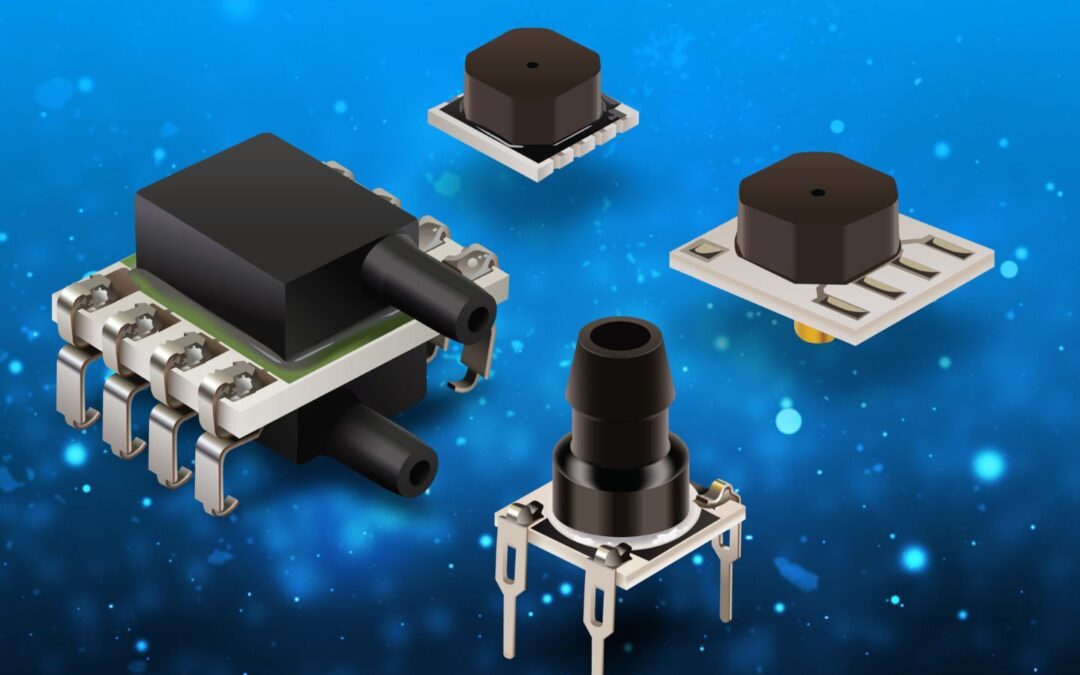
MEMS sensors have become one of the most influential technologies shaping the evolution of modern consumer electronics, quietly powering the smart features that users now take for granted in everyday devices. MEMS, or Micro-Electro-Mechanical Systems, refers to miniature mechanical and electromechanical components fabricated using semiconductor manufacturing techniques. These tiny sensors are capable of detecting motion, pressure, temperature, sound, light, and a wide range of environmental conditions with remarkable accuracy. Their small size, low power consumption, and high performance have made them indispensable components in smartphones, smartwatches, wireless earbuds, gaming controllers, fitness trackers, and smart home devices. What once required bulky mechanical parts can now be accomplished on microscopic silicon structures integrated directly onto chips. As consumer demand continues to shift toward smaller, faster, smarter, and more energy-efficient devices, MEMS sensors provide the physical interface that connects the digital world of software and data processing to the physical world of motion, sound, and environmental interaction. Without MEMS technology, many of the most defining features of modern electronics, such as screen rotation, step counting, voice recognition, and gesture control, simply would not function at the level users expect today.
One of the most transformative impacts of MEMS sensors on consumer electronics is their role in enabling advanced motion detection and spatial awareness. Accelerometers, gyroscopes, and magnetometers form the sensor fusion backbone that allows devices to understand orientation, movement, and position in three-dimensional space. In smartphones, these sensors enable automatic screen rotation, image stabilization in cameras, immersive gaming experiences, and precise navigation assistance. In wearable devices, MEMS motion sensors track steps, posture, sleep cycles, and workout performance with increasing levels of accuracy. Gaming controllers and virtual reality systems rely heavily on these sensors to translate real-world movement into digital action with minimal latency. The compact size of MEMS sensors allows manufacturers to embed multiple sensing functions into a single chip, reducing hardware complexity while enhancing performance. As augmented reality and spatial computing continue to grow in popularity, MEMS sensors will become even more critical in delivering realistic motion tracking and immersive user experiences. Their ability to capture subtle physical movements with high sensitivity is a key reason why modern consumer electronics feel more responsive, intuitive, and interactive than ever before.
MEMS sensors are also dramatically enhancing audio performance and voice interaction in consumer electronics through the widespread adoption of MEMS microphones. These miniature microphones offer superior noise reduction, high sensitivity, and consistent performance compared to traditional electret condenser microphones. Their small form factor allows manufacturers to place multiple microphones within a single device, enabling advanced features such as beamforming, echo cancellation, and far-field voice recognition. This is particularly important for smart speakers, wireless earbuds, smartphones, and voice-controlled home assistants, where accurate voice capture is essential for seamless user interaction. MEMS microphones also perform reliably under varying temperature and humidity conditions, making them ideal for both indoor and outdoor use. As voice user interfaces become more central to how people interact with technology, MEMS audio sensors provide the hardware foundation that enables natural, hands-free communication. From making phone calls in noisy environments to issuing voice commands across a room, these tiny sensors play a massive role in shaping the user experience of modern audio-enabled consumer electronics.
Another critical way MEMS sensors are enhancing modern consumer electronics is through environmental and biometric sensing. Pressure sensors enable altitude detection in smartphones and wearables, improving navigation accuracy and supporting advanced fitness metrics such as stair climbing and elevation gain. Temperature and humidity sensors help optimize device performance, battery safety, and climate control functions in smart home systems. Optical MEMS sensors support ambient light detection for automatic brightness adjustment, improving both user comfort and energy efficiency. Biometric sensing is also increasingly powered by MEMS technology, particularly in health-focused wearables. MEMS-based heart rate monitors, blood oxygen sensors, and motion-based health trackers enable continuous monitoring of vital signs with medical-grade precision. These capabilities allow users to gain deep insights into their physical condition, activity levels, stress patterns, and sleep quality. As preventive healthcare and personalized wellness become central themes in consumer technology, MEMS sensors provide the real-time physiological data that makes personalized digital health possible. Their reliability, miniaturization, and low power consumption make continuous health monitoring practical for everyday use rather than limited to clinical environments.
Energy efficiency and battery performance are also being significantly improved through the integration of MEMS sensors into consumer electronics. Because these sensors operate at extremely low power levels, they allow devices to remain aware of their surroundings without placing a heavy burden on battery life. Motion-activated displays, smart wake-up features, and adaptive power management systems all rely on MEMS sensing to detect when a device is being used and when it can safely enter low-power states. For example, a smartphone can use its accelerometer to detect when it is lifted, instantly waking the display without requiring user input. Wearables can adjust sensor sampling rates based on activity intensity, conserving energy during periods of rest. MEMS sensors also enable battery safety mechanisms by monitoring temperature and pressure inside battery systems, reducing the risk of overheating or failure. As consumers demand longer battery life without sacrificing performance, MEMS sensors provide an elegant solution by delivering constant situational awareness at minimal energy cost, allowing devices to become smarter while remaining efficient.
The role of MEMS sensors in connectivity and smart environments is also expanding rapidly as consumer electronics become increasingly integrated into interconnected ecosystems. In smart homes, MEMS sensors enable automatic lighting control, motion-activated security systems, intelligent thermostats, and air quality monitoring devices that adapt in real time to human behavior and environmental changes. In connected vehicles, MEMS sensors support advanced driver-assistance features such as airbag deployment, stability control, cabin pressure monitoring, and occupant detection. As the Internet of Things continues to grow, MEMS sensors act as the physical data collectors that feed real-time information into cloud platforms and artificial intelligence systems. This constant flow of accurate sensor data allows smart systems to learn user preferences, optimize resource consumption, and automate complex processes without manual intervention. The scalability of MEMS manufacturing also makes it possible to deploy billions of sensors across global consumer and industrial markets, creating a massive sensing network that connects people, devices, and environments into a unified digital ecosystem.
Looking toward the future, MEMS sensors will continue to evolve alongside advances in artificial intelligence, edge computing, and next-generation connectivity, further enhancing their impact on modern consumer electronics. Future MEMS devices will become even smaller, more sensitive, and more energy efficient, enabling new categories of ultra-thin wearables, implantable medical devices, and intelligent ambient systems. Integration with AI will allow sensors not only to collect data but also to interpret it locally, enabling faster decision-making and reduced dependence on cloud processing. Multi-sensor fusion will become increasingly sophisticated, allowing devices to develop a richer understanding of context, intention, and environmental dynamics. As consumer electronics move toward more immersive, personalized, and autonomous experiences, MEMS sensors will remain at the core of this transformation. They provide the crucial bridge between the physical world and the digital intelligence that defines modern technology. By enabling precise sensing, real-time responsiveness, energy efficiency, and seamless connectivity, MEMS sensors are not merely enhancing consumer electronics—they are fundamentally redefining what modern devices are capable of achieving.