
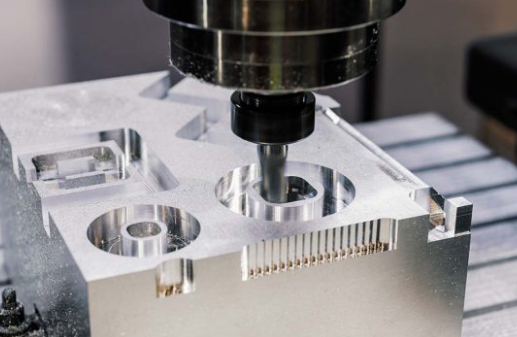
As global industries evolve, the demand for accurate, durable, and high-performance components continues to rise. Manufacturers are now turning to advanced CNC machining, sheet metal fabrication, and precision engineering technologies to meet the expectations of various sectors, from aerospace and automotive to electronics and industrial machinery.
Today’s manufacturing landscape prioritizes speed, precision, and innovation — and advanced digital fabrication techniques are at the center of that transformation.
The Advancements Behind CNC Machining Technology
CNC machining has grown rapidly with the development of smarter software, higher-speed tools, and multi-axis capabilities. These improvements allow manufacturers to produce intricate parts that were previously too complex or time-consuming to create.
Key advancements include:
-
AI-powered toolpath optimization
-
5-axis machining for extreme precision
-
High-speed cutting and reduced cycle times
-
Improved tolerance control for complex geometries
-
Automated tool changing and real-time monitoring
With these advancements, industries can now produce stronger, lighter, and more reliable components at scale.
Sheet Metal Fabrication in the Era of Digital Manufacturing
Sheet metal fabrication remains essential for creating everything from electrical enclosures to industrial machinery structures. With the integration of digital cutting, automated bending, and advanced welding systems, the process has become faster and more accurate than ever.
Modern fabrication capabilities include:
-
Laser cutting for clean, precise edges
-
CNC bending for consistent angles
-
TIG/MIG welding for durable connections
-
Powder coating and anodizing finishes
-
Custom sheet metal prototyping and small-batch production
This makes sheet metal fabrication a flexible solution for both structural and aesthetic applications.
The Importance of Rapid Prototyping for Product Development
In competitive markets, reducing time-to-market is crucial. Rapid prototyping allows engineers and product designers to test ideas quickly, validate design performance, and make adjustments before committing to large-scale production.
Rapid prototyping enables:
-
Faster design iterations
-
Better product testing
-
Reduced development cost
-
Accurate fit and functionality analysis
-
Faster transition from concept to production
Prototyping is especially valuable for startups and R&D teams exploring new technologies.
Custom Manufacturing for Multiple Industrial Sectors
Modern manufacturing providers support a wide range of industries, each requiring specific materials, tolerances, and performance standards.
Common sectors include:
-
Electronics manufacturing – heat dissipation parts, casings, brackets
-
Automotive engineering – engine components, drive parts, prototypes
-
Aerospace systems – lightweight, high-strength precision parts
-
Robotics and automation – mechanical arms, gears, structural frames
-
Medical devices – surgical tools, testing equipment housings
-
Energy and industrial machinery – rugged metal components
Each of these industries depends heavily on the accuracy and reliability of CNC and fabrication processes.
Scaling from Prototype to High-Volume Production
A key advantage of modern manufacturing technology is its ability to support both low-volume and large-scale runs. Businesses can begin with small batches for testing and easily scale up when ready for commercial release.
Benefits of scalable production include:
-
Flexible order quantities
-
Lower manufacturing risk
-
Consistent quality across large batches
-
Access to mass production without changing suppliers
-
Streamlined logistics and packaging
This adaptability is essential for companies developing new or rapidly evolving products.
Quality Control: The Foundation of Reliable Manufacturing
Quality assurance plays a critical role in modern production. Manufacturers employ advanced inspection systems and global certification standards to ensure accuracy and performance.
Quality standards often include:
-
CMM measurement for dimensional accuracy
-
Full inspection reports for sensitive industries
-
Material traceability
-
Compliance with ISO-grade certifications
-
First article inspection (FAI) for initial samples
These measures ensure that every component meets the necessary specifications and safety requirements.
Conclusion
Companies like FSFab CNC are leading this transformation by offering advanced machining, fabrication, and rapid prototyping services tailored for modern industries.
With innovative digital manufacturing capabilities, FSFab CNC supports businesses in achieving higher precision, faster turnaround times, and scalable production
Kindly confirm once the link is added or let me know if you need any more details.
The combination of CNC machining, sheet metal fabrication, and rapid prototyping continues to reshape the manufacturing industry. Through technological advancements, automation, and improved quality assurance, modern manufacturers can produce high-performance parts faster, more accurately, and more cost-effectively than ever before.
As industries push for greater efficiency and innovation, advanced manufacturing technologies will remain a cornerstone of global production, driving future growth and supporting the next generation of engineering breakthroughs.