
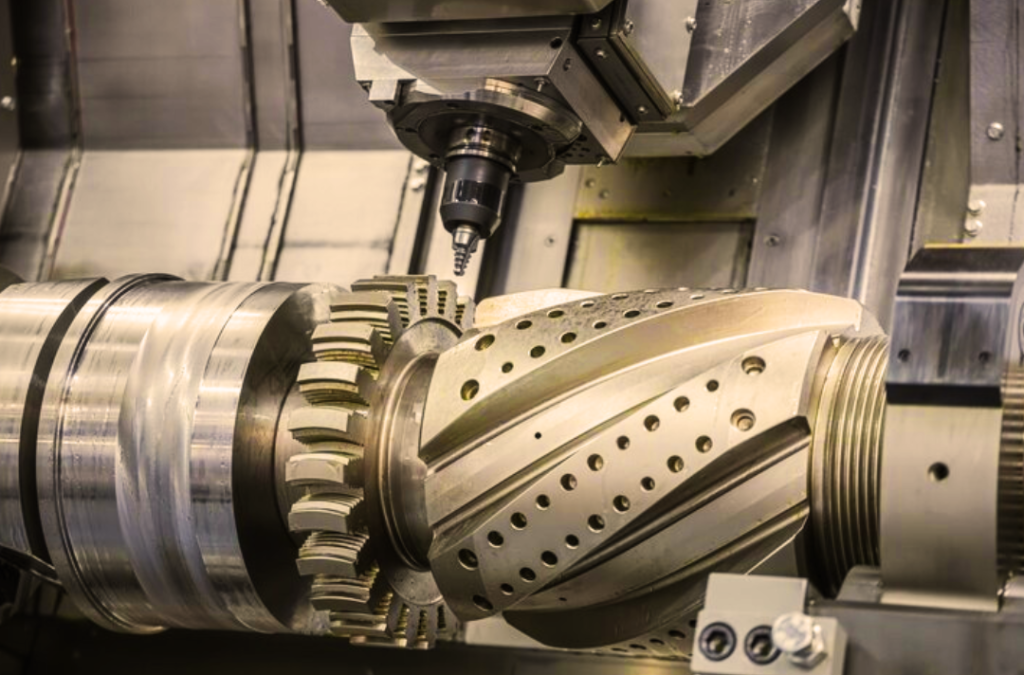
Modern manufacturing depends heavily on precision, consistency, and efficiency, especially when it comes to producing high-accuracy cylindrical components used in industries such as aerospace, automotive, medical devices, and energy systems. At the heart of this precision lies CNC lathe technology, a cornerstone of advanced machining that allows manufacturers to achieve extreme dimensional accuracy, superior surface finish, and repeatable results at scale. CNC lathes operate by rotating the workpiece while a fixed cutting tool removes material with micron-level control, making them ideal for shafts, bushings, sleeves, pins, and threaded components. However, achieving true high-accuracy output is not just a matter of owning a CNC lathe—it requires a strategic combination of tooling selection, machine calibration, cutting parameters, programming strategies, and quality control processes. As tolerances become tighter and functional demands grow higher, manufacturers must refine their CNC lathe techniques to meet increasingly strict specifications while maintaining production efficiency and cost-effectiveness.
One of the most critical foundations of high-accuracy CNC lathe machining lies in machine setup and alignment. Even the most advanced CNC lathe will fail to deliver precision results if the machine geometry is compromised. Spindle alignment, tailstock concentricity, guideway straightness, and turret positioning all play vital roles in ensuring dimensional consistency along the entire length of a cylindrical part. Thermal stability is another key factor; fluctuations in temperature during extended machining cycles can cause subtle expansions that lead to dimensional drift. To combat this, many high-end CNC lathes incorporate temperature compensation systems and controlled cooling circuits. Proper workholding is equally important, as poor clamping techniques introduce runout and vibration that directly affect circularity and surface quality. Precision chucks, collet systems, and hydraulic fixtures are widely used to secure workpieces with minimal distortion. Additionally, pre-machining inspection of raw material ensures uniformity in diameter, straightness, and hardness, which significantly reduces error accumulation during turning operations.
Tool selection and tool condition management are equally essential for producing accurate cylindrical components. Cutting tools fitted with inserts made from carbide, ceramic, cubic boron nitride (CBN), or polycrystalline diamond (PCD) allow machinists to tailor performance based on material type, hardness, and finishing requirements. Sharpness and edge geometry heavily influence cutting forces, chip formation, and surface integrity. Even a slightly worn insert can cause micro-tearing, poor surface finish, and size inconsistency. Therefore, proactive tool life monitoring and replacement scheduling are critical practices in high-accuracy CNC lathe operations. Additionally, the radius of the tool nose directly impacts the achievable surface finish and dimensional precision. Smaller radii allow for fine finishing but require slower feed rates, while larger radii handle heavier cuts but demand precise compensation in programming. Tool offset calibration using laser tool setters and automated probing ensures that every cutting edge interacts with the workpiece exactly as intended in the CNC program.
Programming strategies play a decisive role in achieving ultra-tight tolerances in cylindrical machining. Modern CNC lathe programming relies on advanced CAM software capable of generating optimized toolpaths with precise control over feed rates, spindle speeds, depth of cut, and approach angles. High-accuracy turning often requires multi-pass roughing followed by semi-finishing and dedicated finishing passes to eliminate deflection and chatter. Constant surface speed (CSS) control is widely used to maintain consistent cutting conditions as the diameter changes during turning. This results in uniform chip load, reduced heat buildup, and more consistent surface finishes. In addition, adaptive feed control allows the CNC system to dynamically adjust cutting parameters based on real-time load feedback, minimizing tool stress and thermal deformation. Sub-micron precision parts often require in-process measurement using touch probes that automatically adjust tool offsets between passes, eliminating cumulative error and ensuring the final dimensions remain within tolerance.
Vibration control and surface integrity management are also decisive factors in producing high-accuracy cylindrical parts. Chatter, even at low amplitudes, degrades surface quality and introduces dimensional fluctuations that compromise functional performance. To mitigate this, machinists carefully balance spindle speeds with tool overhang and workpiece rigidity. Shorter tool stick-outs, balanced toolholders, and damped boring bars are frequently used for deep or slender cylindrical components. Cutting fluid selection further enhances precision by reducing friction, evacuating chips, and stabilizing cutting temperatures. High-pressure coolant systems ensure chips are cleared from the cutting zone, preventing re-cutting and surface scarring. In applications requiring mirror-like finishes or extreme roundness, hard turning and superfinishing techniques may be employed after heat treatment to eliminate the need for grinding while still achieving exceptional surface integrity and geometric accuracy.
Quality assurance is the final and indispensable layer of high-accuracy CNC lathe production. Metrology tools such as coordinate measuring machines (CMM), roundness testers, laser micrometers, and surface roughness analyzers verify that every critical dimension meets specification. Statistical process control (SPC) is widely implemented in precision turning environments to monitor trends and detect deviations before they result in scrap. By analyzing real-time production data, manufacturers can fine-tune cutting parameters, tool change intervals, and machine compensation values to maintain stable output across long production runs. As digital manufacturing continues to evolve, smart CNC lathes now integrate directly with manufacturing execution systems (MES), enabling predictive maintenance, automated reporting, and machine-learning-based optimization. This convergence of precision mechanics, software intelligence, and data analytics ensures that the future of high-accuracy cylindrical machining will be defined not only by mechanical excellence but also by digital precision and real-time adaptability—setting new standards for consistency, efficiency, and product reliability across global manufacturing industries.