
In the era of high-volume production and globalized supply chains, material handling has evolved from a supporting operational function into a strategic pillar of large-scale manufacturing performance. Advanced material handling solutions now play a decisive role in determining how efficiently raw materials, components, and finished goods move through complex production environments. For large-scale manufacturers, the challenge is no longer simply transporting materials from one point to another, but orchestrating a seamless, synchronized flow that aligns perfectly with production schedules, workforce deployment, and real-time market demand. As manufacturing operations scale up in size and complexity, inefficiencies in material movement multiply rapidly, resulting in bottlenecks, increased labor costs, safety risks, and production delays. Advanced material handling systems address these challenges through automation, digital integration, and intelligent control mechanisms that ensure materials reach the right place at the right time in the right condition. By transforming material flow into a data-driven, automated process, manufacturers unlock higher throughput, improved reliability, and long-term operational scalability in an intensely competitive industrial landscape.
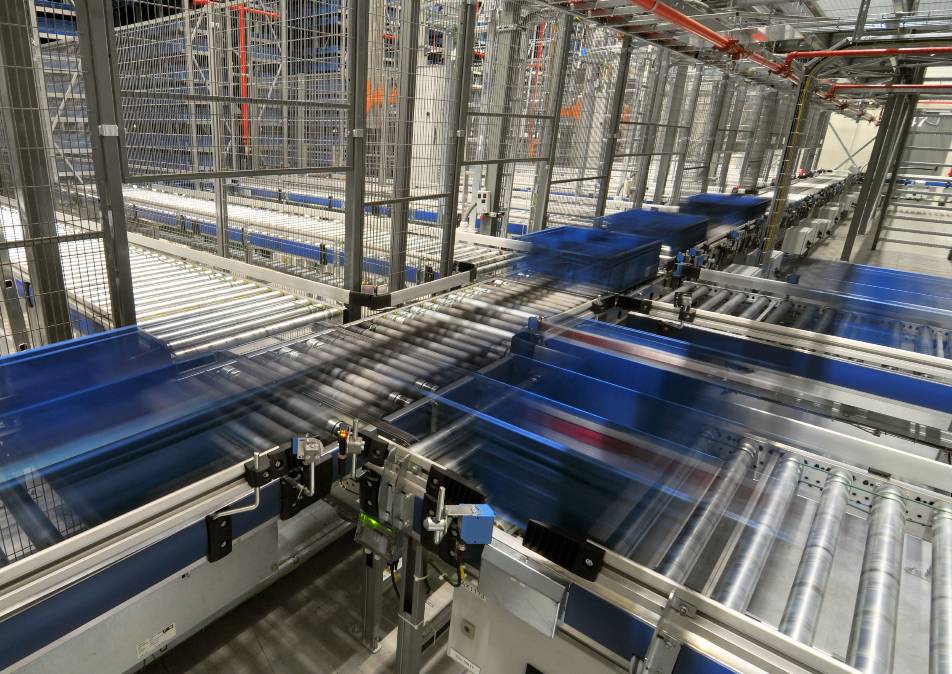
One of the most transformative aspects of advanced material handling solutions is the integration of automation technologies that significantly reduce dependency on manual labor while increasing speed and precision. Automated guided vehicles (AGVs), autonomous mobile robots (AMRs), and conveyor systems are now standard components of large-scale manufacturing environments where continuous material flow is essential. These systems enable the automated transport of raw materials, work-in-progress inventory, and finished goods across expansive factory floors and warehouse facilities without human intervention. Unlike traditional fixed systems, modern AMRs navigate dynamically using sensors, machine vision, and artificial intelligence, allowing them to adapt in real time to layout changes, obstacles, and shifting workflow priorities. This flexibility is crucial for large-scale manufacturers that operate multiple production lines with varying product configurations. Automated palletizing, depalletizing, and robotic picking systems further accelerate material handling at critical transfer points, reducing manual handling injuries while ensuring consistent accuracy. As production volumes increase, automation enables manufacturers to scale material movement capacity without proportionally increasing labor costs, delivering measurable improvements in cost efficiency and operational resilience.
Advanced material handling solutions also play a critical role in optimizing inventory management and warehouse operations for large-scale manufacturers. Traditional warehousing models relied heavily on static storage, manual picking, and batch-based inventory control, which often resulted in overstocking, stockouts, and inefficient space utilization. Today’s advanced systems leverage high-density automated storage and retrieval systems (AS/RS), vertical lift modules, and smart racking solutions that maximize cubic storage capacity while maintaining rapid access to materials. These systems are powered by warehouse management software that tracks inventory in real time, synchronizes picking activities with production demand, and automatically optimizes storage locations based on turnover rates. For large-scale manufacturers operating across multiple facilities and geographic regions, digital inventory visibility enables centralized control over stock levels, reducing excess inventory while maintaining production continuity. Automated order fulfillment systems further streamline the flow of finished goods, enabling faster order processing and more accurate shipments. Through these technologies, advanced material handling transforms warehousing from a cost-intensive necessity into a highly optimized, performance-driven asset.
The impact of advanced material handling solutions extends beyond physical movement and storage into the core of production efficiency and workflow synchronization. In large-scale manufacturing environments, production success depends on precisely timed material delivery to each workstation, assembly cell, and machining center. Delays or misallocations at any point can disrupt the entire production flow. Automated line-side delivery systems ensure that materials arrive exactly when needed in the correct quantities, supporting just-in-time and lean manufacturing strategies. Intelligent conveyors and buffering systems regulate material flow between processes, preventing accumulation at bottlenecks and starvation at downstream stations. Real-time production tracking and material flow analytics enable manufacturers to monitor line performance continuously and make immediate adjustments when imbalances occur. By tightly integrating material handling with production control systems, large-scale manufacturers achieve smoother workflows, shorter cycle times, and higher equipment utilization rates, all of which directly contribute to increased output and reduced operating costs.
Worker safety and ergonomics represent another area where advanced material handling delivers substantial strategic value for large-scale manufacturers. Traditional material handling tasks often involved repetitive lifting, pushing, pulling, and carrying of heavy loads, exposing workers to musculoskeletal injuries and long-term health risks. Advanced handling solutions minimize these risks through robotic lifting systems, automated conveyors, vacuum-assisted lifting devices, and collaborative robots that work safely alongside human operators. These technologies reduce physical strain while maintaining productivity under demanding production conditions. Intelligent safety systems equipped with sensors, light curtains, and real-time monitoring further protect workers by preventing collisions between automated equipment and personnel. As regulatory scrutiny over workplace safety increases and labor availability becomes more constrained, advanced material handling supports not only compliance but also workforce sustainability. By creating safer, more ergonomic work environments, manufacturers improve employee retention, reduce lost-time incidents, and enhance overall operational stability.
Beyond efficiency and safety, advanced material handling solutions are increasingly central to sustainability initiatives across large-scale manufacturing operations. Energy-efficient motors, regenerative braking systems, and optimized routing algorithms reduce the energy footprint of automated material transport. Smart warehouses integrate lighting automation, climate control optimization, and energy monitoring systems to minimize environmental impact without compromising performance. By improving space utilization through high-density storage and vertical systems, manufacturers reduce the need for facility expansion, lowering construction-related emissions and land use. Advanced inventory management also reduces material overproduction and obsolete stock, minimizing waste generation across the supply chain. Through digital tracking and analytics, manufacturers can measure and report the carbon footprint of material handling activities with greater accuracy, supporting environmental, social, and governance objectives. As sustainability expectations from customers, investors, and regulators continue to rise, advanced material handling becomes a foundational enabler of environmentally responsible large-scale manufacturing.
Ultimately, advanced material handling solutions are reshaping large-scale manufacturing into highly connected, adaptive, and intelligent industrial ecosystems. As Industry 4.0 technologies mature, material handling systems will become even more autonomous and predictive, driven by artificial intelligence, digital twins, and real-time data integration. Future handling systems will not only move materials but will anticipate demand shifts, reconfigure workflow paths automatically, and coordinate seamlessly with production planning, logistics, and enterprise systems. This convergence of automation, intelligence, and connectivity will enable manufacturers to operate with unprecedented responsiveness and precision across global production networks. For large-scale manufacturers, investing in advanced material handling is no longer a tactical upgrade—it is a strategic transformation that directly shapes competitiveness, scalability, risk resilience, and long-term profitability in an increasingly complex industrial world.