
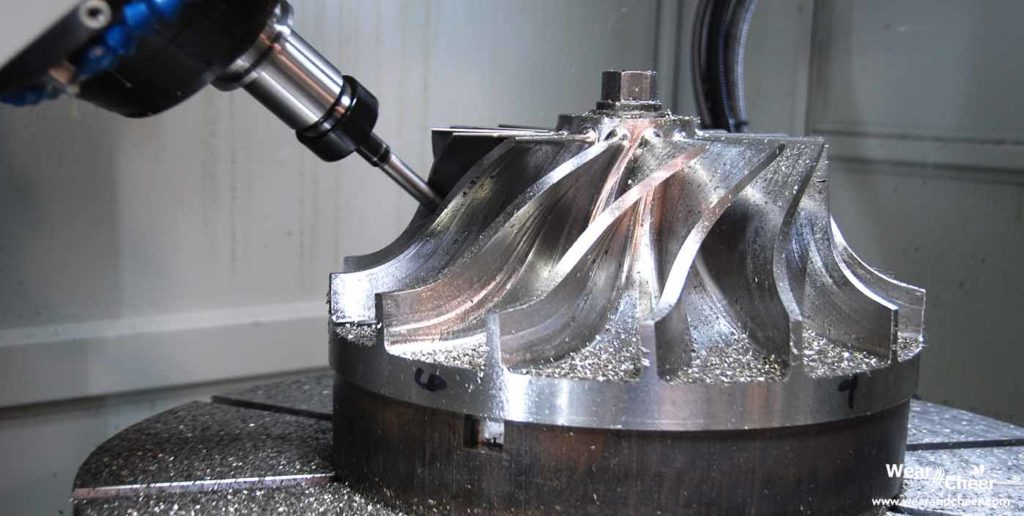
In the rapidly advancing world of industrial production, precision has become the key factor that drives efficiency, consistency, and overall product quality. As manufacturing demands more complex shapes, tighter tolerances, and faster turnaround times, Computer Numerical Control (CNC) engineering emerges as the foundation of modern fabrication. Industries across aerospace, automotive, defense, robotics, and electronics depend heavily on CNC technology to achieve the exact specifications required for high-performance components.
The Role of CNC Machining in Today’s Production Environment
CNC machining combines digital programming with advanced cutting tools to create parts with extreme accuracy. Unlike manual processes, CNC systems operate based on code-generated instructions, ensuring repeatability across every production cycle. This makes it possible to manufacture thousands of identical units without compromising quality.
Key advantages include:
-
High precision and repeatability
CNC machines maintain consistent tolerances that meet strict industrial standards. -
Faster production times
Automated processes significantly reduce lead times compared to manual machining. -
Material versatility
CNC technology works with aluminum, steel, titanium, brass, copper, composites, and various polymers. -
Reduced human error
Automation minimizes mistakes, resulting in smoother workflows and more reliable outcomes.
Metal Fabrication Capabilities That Support Innovation
Modern fabrication facilities are equipped with a combination of machining centers, welding systems, finishing stations, and assembly resources. Together, these capabilities support both simple and highly complex projects.
Common fabrication services include:
-
Precision milling and turning for complex geometries
-
Sheet metal fabrication including cutting, bending, and forming
-
Custom welding and metal joining for structural strength
-
Laser cutting for intricate profiles and detailed patterns
-
Surface finishing such as anodizing, polishing, coating, and sandblasting
-
Prototyping and full-scale production based on client requirements
With these capabilities, manufacturers can support industries that need both rapid development and long-term production solutions.
Why Precision Engineering Matters in Product Development
Every industry that relies on mechanical or electronic components understands the importance of tight tolerances. Even a difference of a few microns can affect performance, safety, or compatibility. Precision engineering ensures:
-
Better product lifespan
-
Enhanced structural reliability
-
Improved operational efficiency
-
Optimal functionality under high stress or demanding environments
This level of accuracy is especially important in sectors such as medical devices, aerospace structures, robotics assemblies, and industrial automation systems.
Custom Solutions Tailored to Complex Requirements
Today’s engineers require solutions that can adapt to challenging designs, quick timeline changes, and innovations in materials. CNC machining and modern fabrication provide the flexibility to deliver custom builds, unique prototypes, and low- or high-volume manufacturing without sacrificing quality.
Manufacturing teams collaborate closely with clients to understand required specifications, intended applications, and performance expectations. This partnership-driven approach ensures components not only meet but exceed industry standards.
Supporting the Future of Manufacturing
As automation, robotics, and digitalization continue to transform industries, CNC machining will remain one of the most essential technologies in production. Its ability to consistently deliver accurate, high-quality components makes it indispensable for companies aiming to innovate and stay competitive.
Whether producing a single prototype or thousands of precision parts, modern fabrication powered by CNC engineering ensures every detail is executed with accuracy, durability, and reliability.