
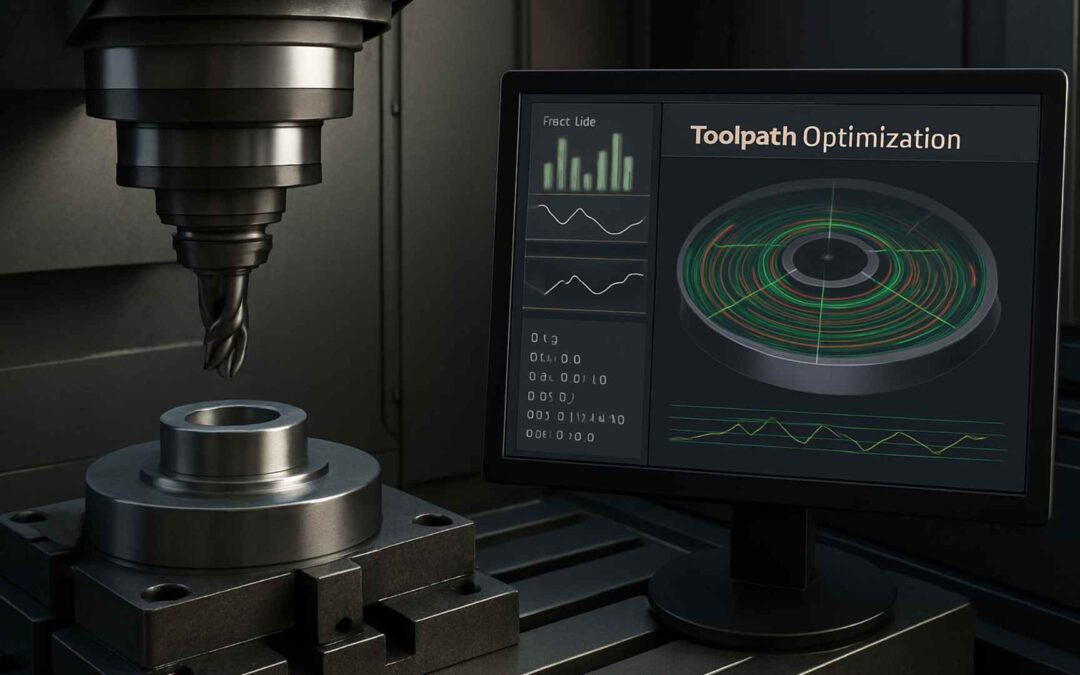
Optimizing toolpath strategies for high-speed CNC milling has become a critical priority for modern manufacturing operations that demand higher productivity, superior surface quality, and reduced production costs. High-speed machining is fundamentally different from conventional milling because it operates at significantly higher spindle speeds, feed rates, and cutting dynamics. While the machines themselves are engineered for speed and precision, the true performance advantage of high-speed CNC milling is only realized when toolpath strategies are properly optimized. A poorly designed toolpath can cause excessive tool wear, vibration, thermal buildup, and surface defects, effectively negating the benefits of advanced hardware. In contrast, well-optimized toolpaths ensure constant tool engagement, smooth cutting forces, and stable chip evacuation, leading to faster cycle times and longer tool life. As industries such as aerospace, automotive, medical, and mold manufacturing continue to push the limits of material hardness, geometric complexity, and production volume, the importance of intelligent toolpath optimization has shifted from being a technical preference to a competitive necessity. The evolution of modern CAM software, real-time simulation, and adaptive machining algorithms is now allowing manufacturers to unlock the full potential of high-speed CNC milling with unprecedented control and efficiency.
One of the most important principles behind optimizing toolpath strategies for high-speed CNC milling is maintaining consistent tool engagement and chip load throughout the cutting process. Traditional toolpaths often rely on linear or circular motion patterns that cause sudden changes in cutting direction, leading to fluctuating cutting forces and uneven tool loading. These force variations increase vibration, degrade surface finish, and accelerate tool wear. Advanced toolpath strategies such as adaptive clearing, trochoidal milling, and dynamic motion control are specifically designed to eliminate these inefficiencies. By maintaining a constant scallop height and uniform chip thickness, these strategies allow the tool to move smoothly through the material without abrupt directional changes. This results in lower spindle load, reduced heat generation, and a more predictable cutting environment. Consistent tool engagement also allows operators to safely increase feed rates without risking tool breakage or surface damage. As a result, manufacturers can achieve faster material removal rates while preserving dimensional accuracy and surface integrity. The ability to maintain cutting stability across complex geometries is one of the defining factors that separate high-performance CNC operations from conventional machining environments.
Another major factor in optimizing high-speed CNC milling toolpaths is the intelligent management of thermal and mechanical stresses on both the cutting tool and the workpiece. At high spindle speeds, heat buildup becomes one of the most significant threats to machining stability and part accuracy. Excessive heat can cause thermal expansion, dimensional distortion, loss of material hardness, and premature tool failure. Modern toolpath strategies address this by minimizing dwell time, avoiding sharp directional changes, and distributing cutting loads evenly across the tool’s cutting edges. High-efficiency milling paths ensure that the tool is constantly in motion, preventing localized heat accumulation in any single region of the part. In addition, climb milling strategies are often favored in high-speed applications because they reduce rubbing, lower cutting temperatures, and improve surface finish. Optimized lead-in and lead-out motions further prevent impact shocks during tool entry and exit, which are common causes of micro-chipping and catastrophic tool breakage. When thermal and mechanical stresses are properly controlled through intelligent toolpath design, high-speed CNC milling becomes not only faster but also more reliable and predictable across long production runs.
Toolpath optimization also plays a decisive role in achieving superior surface quality and dimensional precision in high-speed CNC milling. At elevated cutting speeds, even small inconsistencies in motion can leave visible tool marks, chatter patterns, and surface ripples that compromise part quality. This is particularly critical in industries such as mold making, medical device manufacturing, and aerospace, where surface finish is directly tied to product performance and regulatory compliance. Advanced finishing toolpaths are designed to maintain constant contact between the tool and the part surface while minimizing step-over variations and feed rate fluctuations. Pencil milling, scallop-based finishing, and constant cusp height strategies allow tool motion to conform smoothly to complex 3D geometries without introducing abrupt surface transitions. High-speed simulation tools further enhance accuracy by allowing engineers to visualize cutter engagement, predict deflection, and identify potential collision risks before machining begins. By refining toolpath motion at the micron level, manufacturers are able to consistently achieve mirror-like finishes and tight tolerances that once required extensive manual polishing and secondary finishing processes.
The optimization of toolpath strategies for high-speed CNC milling also directly impacts overall machine utilization, production throughput, and operational efficiency. In traditional machining environments, machines often sit idle during tool changes, repositioning, and conservative feed adjustments designed to prevent failures. Optimized high-speed toolpaths dramatically reduce non-cutting time by streamlining tool movements and eliminating unnecessary retractions and repositioning steps. Continuous motion strategies allow the machine to remain in a cutting state for a much larger percentage of the machining cycle, maximizing spindle uptime and productivity. Modern CAM systems can automatically adjust feed rates based on local geometry, curvature, and tool engagement conditions, enabling aggressive cutting where safe while slowing down only when necessary. This dynamic control shortens cycle times without compromising safety or accuracy. As manufacturers face increasing pressure from shortened lead times, mass customization demands, and global competition, the ability to extract maximum productivity from every CNC machine through optimized toolpaths has become a decisive factor in maintaining profitability.
Material behavior is another critical variable that must be considered when optimizing toolpath strategies for high-speed CNC milling. Different materials respond very differently to high-speed cutting conditions, and toolpaths must be adapted accordingly. Aluminum alloys, for example, allow extremely high feed rates but require efficient chip evacuation to prevent built-up edge and clogging. Hardened steels demand lower engagement angles, controlled heat input, and more conservative tool loading to prevent excessive tool wear. Titanium and heat-resistant superalloys pose even greater challenges due to their low thermal conductivity and high strength at elevated temperatures. Optimized toolpath strategies account for these material properties by selecting appropriate engagement angles, step-over values, and cutting patterns that maintain thermal stability and prevent work hardening. Multi-axis toolpaths further enhance control by allowing tools to approach complex surfaces at optimal orientations, reducing contact area and improving cutting efficiency. By tailoring toolpath strategies to the specific behavior of each material, manufacturers can achieve consistent performance across a wide range of production scenarios while extending tool life and ensuring stable machining conditions.
Looking to the future, the optimization of toolpath strategies for high-speed CNC milling will become even more intelligent, adaptive, and automated as artificial intelligence, machine learning, and real-time sensor feedback are fully integrated into digital manufacturing environments. AI-driven CAM systems are already being developed to analyze geometry, material properties, cutting conditions, and historical performance data to automatically generate optimal toolpaths with minimal human intervention. Real-time monitoring of spindle load, vibration, temperature, and acoustic signals will allow machines to adjust feed rates and cutting strategies dynamically during operation, compensating instantly for tool wear, material inconsistencies, or unexpected load variations. Digital twins of machining processes will enable full virtual validation of toolpaths before production, reducing trial-and-error and accelerating process refinement. As Industry 4.0 and smart factories continue to evolve, toolpath optimization will no longer be a static programming task but a continuously learning, self-optimizing system. In this future, high-speed CNC milling will achieve unprecedented levels of speed, accuracy, reliability, and economic efficiency, fundamentally redefining how complex precision parts are manufactured in the global industrial landscape.